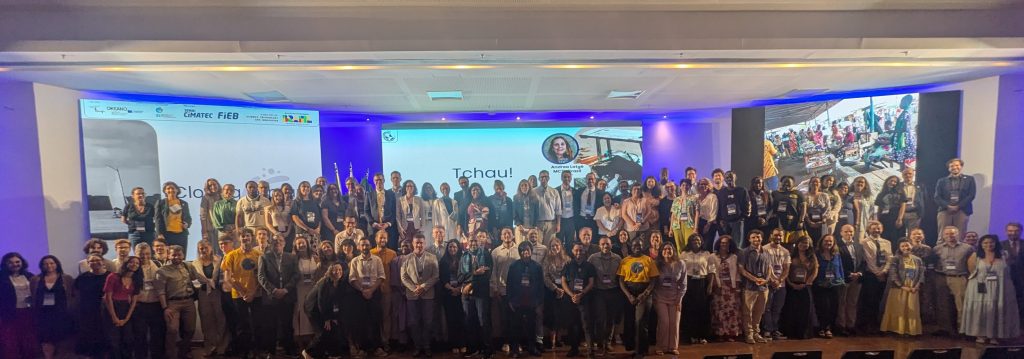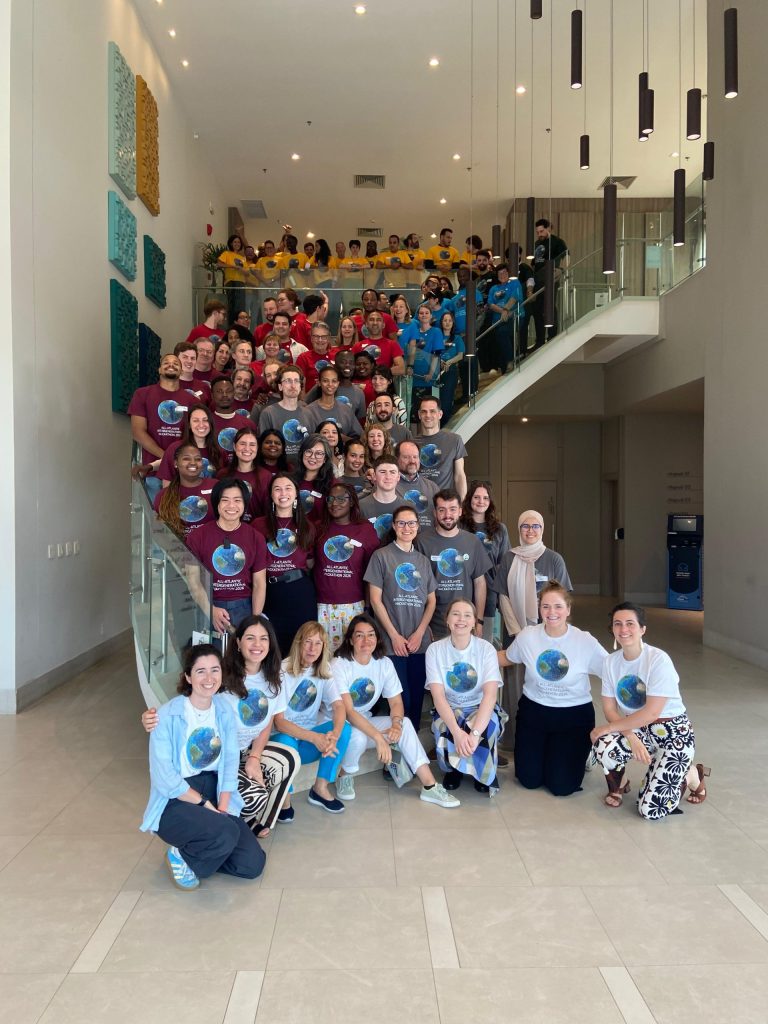
The All-Atlantic Intergenerational Hackathon took place on 13-14 April 2026, right before and as a side event of the 2026 All-Atlantic Ocean Research and Innovation Alliance (AAORIA) Forum in Salvador, Bahia, Brazil. Over 24 intensive hours, 59 Early-Career Ocean Professionals (ECOPs) from across the Atlantic worked directly alongside mid- to late-career ocean professionals: scientists, policy advisers, and project managers. They had one shared mandate: turning ideas into action.
The Hackathon marks an important milestone, not just for the individuals who participated, but for how AAORIA thinks about the role of early-career professionals in ocean governance. The Alliance has long been committed to integrating ECOPs into its work, and this commitment found its most tangible expression yet with the launch of the All-Atlantic Blue Intergenerational Programme at the 2025 All-Atlantic Forum in Brussels. The Programme is creating a vibrant, truly intergenerational community where ECOPs and mid- to Late-Career Ocean Professionals (LCOPs) work together as co-creators and collaborators, not in traditional hierarchical relationships, but as equal partners co-designing solutions, with each generation contributing its unique perspective. The 2026 Intergenerational Hackathon is the latest expression of this Programme, and certainly not its last. The Hackathon builds directly on two years of Intergenerational Dialogues. At the AAORIA Forum in 2024, in Ottawa, over 30 ECOPs delivered six policy briefs to the AAORIA High Level Board, addressing key challenges on coastal resilience and ocean observing, AAORIA’s two priority areas of action. At the 2025 Forum in Brussels, the programme expanded to encompass all seven priorities of the 2022 All-Atlantic Declaration, with around 50 ECOPs developing comprehensive recommendations to decision-makers. Both editions produced strong outputs, but they also prompted a natural question: what happens after the recommendations? The Hackathon was designed to answer it. Rather than producing recommendations alone, teams in Salvador, Bahia, Brazil were asked to produce something demonstrable such a prototype, a mock-up, or a data tool that could be picked up and actually utilised.
Six challenges, six solutions
Each challenge was co-developed with the coordinating organisations, whose expertise aligned directly with the problem being addressed, ensuring that every team had access to relevant specialists. Results were first presented on 14 April to the Hackathon jury, immediately after the 24-hour effort. Then, on 16 April, a spokesperson for each team stepped into the plenary of the 2026 All-Atlantic Forum to pitch their work to AAORIA Partners, ministers, scientists and representatives from across the Atlantic basin. The quality and ambition of the presentations reflected not only the intensity of the sprint itself, but the previous years of institutional investment in building a community of ECOPs ready to contribute at this level.
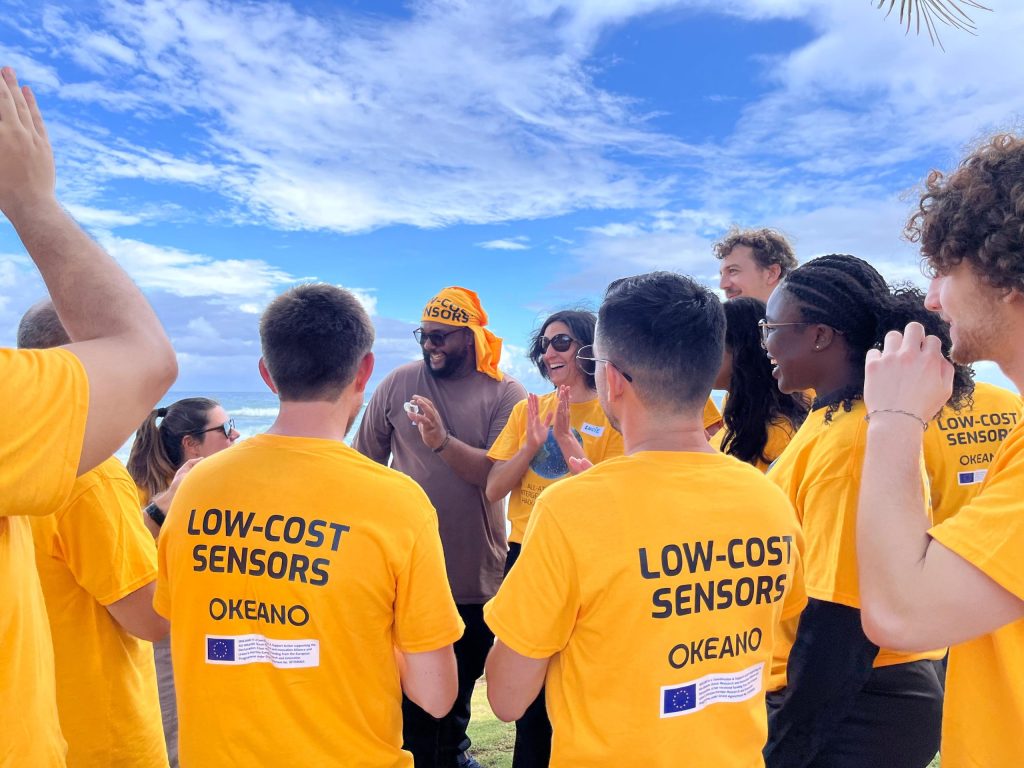
The audience had its say, voting the Low-Cost Sensors team as their overall favourite, with further awards being announced. The specific outputs and awards for each team are outlined below.
Challenge 1: Digital Innovation for Coastal Resilience
Moonshot Award for the most ambitious and forward-thinking vision
The question: How can Indigenous, local, and scientific knowledge work together to strengthen coastal resilience across the Atlantic?
The team designed a knowledge translation application embedded in the All-Atlantic Coastal Resilience Hub. Using AI-powered transcription, translation, and format conversion, the tool transforms audio recordings, video, voice notes on Whatsapp, and community observations into organised policy input. Their pitch reasoned on these questions: What if a story didn’t have to be lost? What if lived experiences could become documented evidence? What if a conversation with an elder could shape coastal policy?
The solution speaks directly to the “nothing about us without us” principle that ran throughout the coastal resilience discussions at the Forum.
This hackathon challenge was coordinated and supported by the All-Atlantic Network of Beacon Sites and ZMT.
Challenge 2: Low-Cost Technologies for Ocean Observation
Team Spirit Award for the enthusiasm and energy that brightened the whole room
All-Atlantic Forum Award voted by the #AAORIAForum26 audience
The question: How can low-cost ocean sensors be effectively used and documented for reliable coastal ocean observation by non-expert users?
Supported by CoastPredict and building on the LandSeaLot project, the team developed an operational framework for transforming existing low-cost sensor technologies into well-documented tools that citizen scientists can reliably deploy and interpret. Their work focused on standardised protocols, accessible documentation, and integration with existing observation networks, making the case that high-impact ocean observation does not require high-cost infrastructure.
This hackathon challenge was coordinated and supported by IFREMER, CMCC, SAEON, +ATLANTIC and in partnership with CoastPredict and LandSeaLot.
Challenge 3: Digital Mapping for Transatlantic Observation
Pole to Pole Award for best showcasing transatlantic cooperation and collaboration
The question: What does the Atlantic digital ocean data landscape actually look like, and where are the gaps?
The team built a structured map of Atlantic data participation, identifying institutions and countries not yet connected to the Ocean Data and Information System (ODIS) and proposing concrete pathways to change that. Their work revealed both the depth of existing engagement and the significant potential for expanding the network.
This hackathon challenge was coordinated and supported by NOAA and INPO.
Challenge 4: Connecting Data to Decisions: Fisheries and Aquaculture
Hackathon Champion Award for the highest overall score given from the Hackathon jury across all evaluation criteria
The question: How do we close the gap between available ocean data and practical decisions for small-scale fishers and aquaculture operators?
Cleverly presenting their idea through Bruno, a fictional fisherman to hook the audience right from the start, the team prototyped a decision support tool linking ocean conditions, climate risk, and ecosystem data to practical, on-the-ground choices for small-scale fishers: gear selection, seasonal planning, area management, and more. Designed to be intuitive for non-specialist users, the tool translates complex datasets into guidance that reaches the people who depend on the ocean for their livelihoods.
This hackathon challenge was coordinated and supported by ICES, PLOCAN and University of Waterloo.
Challenge 5: Monitoring and Managing Large-Scale Sargassum Blooms
Communication and Storytelling Award for the most engaging presentation and overall communication
The question: How can region-specific Sargassum data be showcased to directly support policy and decision-making in coastal management?
Working with real-time data from Copernicus Marine and the Sargassum Information Hub, as well as utilising survey data, the team co-designed user-centred regional webpages that translate complex satellite and monitoring data into formats understandable and usable by coastal managers, policymakers, and affected communities across the Caribbean, West Africa, and South America.
This hackathon challenge was coordinated and supported by Mercator Ocean International, The Ocean Foundation and University of Trinidad and Tobago, in partnership with GeoBluePlanet.
Challenge 6: Blue School Innovation Prototypes for the All-Atlantic Blue School Network
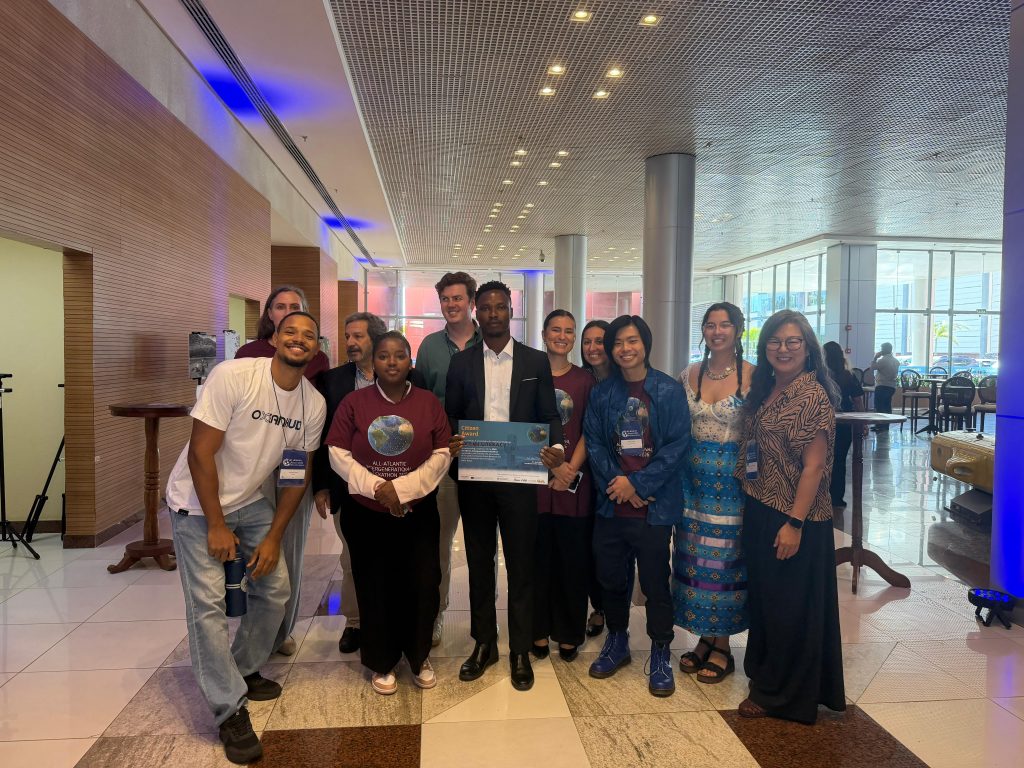
Citizen Award for the most innovative project with strong value for society
The question: How can Blue Schools across the Atlantic transform real-world barriers into opportunities, empowering students and communities to actively safeguard the ocean?
The team co-designed a set of practical, adaptable educational prototypes for the All-Atlantic Blue School Network, combining scientific, cultural, and experiential approaches to bring urgent ocean challenges into the classroom. Their solutions were designed to support teachers, motivate students, and translate learning into civic engagement and measurable behaviour change, making the case that ocean literacy is a genuine driver of long-term ocean governance.
This hackathon challenge was coordinated and supported by EMSEANET, Federal University of São Paulo and University of Aveiro.
More testimonies from the Hackathon, coming soon
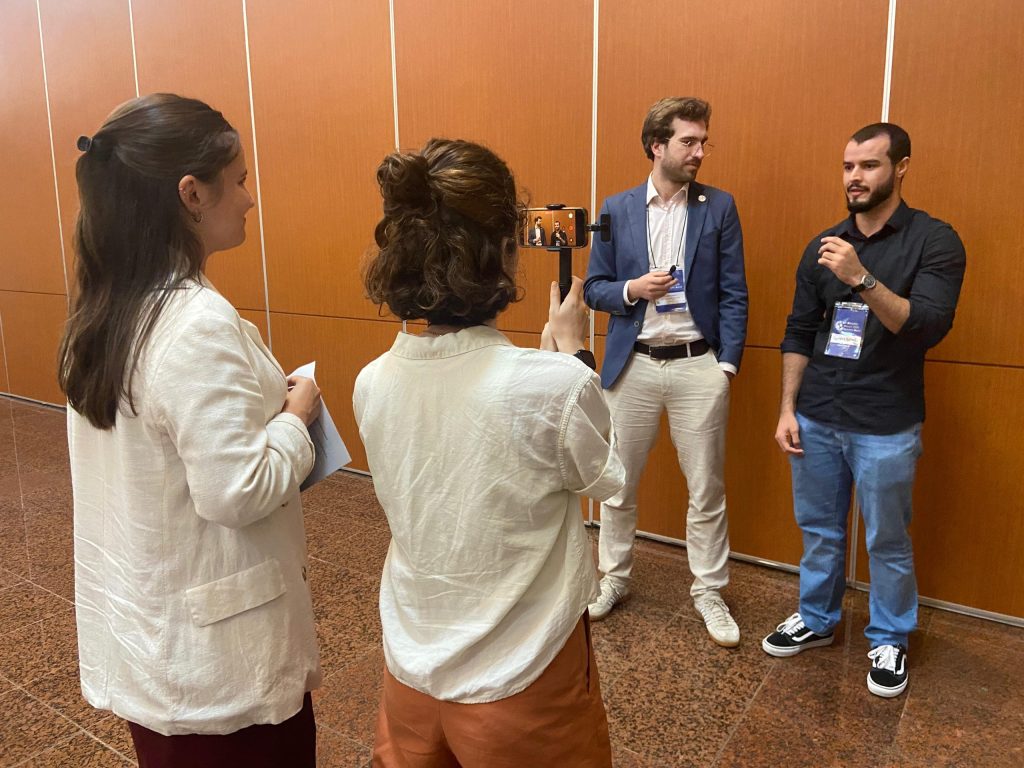
During the Forum, our communications team captured live interviews with ECOPs and their coaches at SENAI CIMATEC: brief, candid moments of reflection on what the 24 hours Hackathon felt like, the breakthroughs, the unexpected directions, and the intergenerational aspect of the activity. Short clips from these interviews are now appearing on our social media channels in an interview series that will last for the coming weeks.
Think of those as trailers. Beyond the short-form content, a series of in-depth podcast interviews is being recorded with Hackathon participants and will be released over the coming months. These conversations go deeper into each challenge, the thinking behind the solutions proposed at Forum, and what ECOPs and LCOPs took away from the experience. They will be available on the All-Atlantic Spotify and YouTube channels.
👉 Subscribe to our newsletter and follow us on LinkedIn, X, Bluesky, and Facebook to be notified when each episode drops.
See you in Galway, Ireland, in October 2026…
The Hackathon may be over, but the work is not. One ECOP from each challenge team is being sought to represent their group at the Atlantic Summit in Galway, Ireland, on 8-9 October 2026, where they will have the opportunity to pitch their Hackathon solution during this event in honour of the Irish Presidency of the EU. This is a valuable opportunity to bring the solutions developed at the 2026 AAORIA Forum into a high-level science diplomacy setting and to continue the conversation with Atlantic partners after the Hackathon.
…but not before a few parting words
The 2026 All-Atlantic Intergenerational Hackathon would not have been possible without its coordinators, sponsors, organisers and participants. The 2026 All-Atlantic Intergenerational Hackathon was organised by the OKEANO Coordination and Support Action (CSA), more specifically it was a task led by IFREMER and supported by JPI Oceans and the Marine Institute, in collaboration with Sigi Gruber. The 2026 AAORIA Forum was hosted by Brazil’s Ministry of Science, Technology and Innovation (MCTI) and SENAI CIMATEC, and endorsed as a UN Ocean Decade activity.
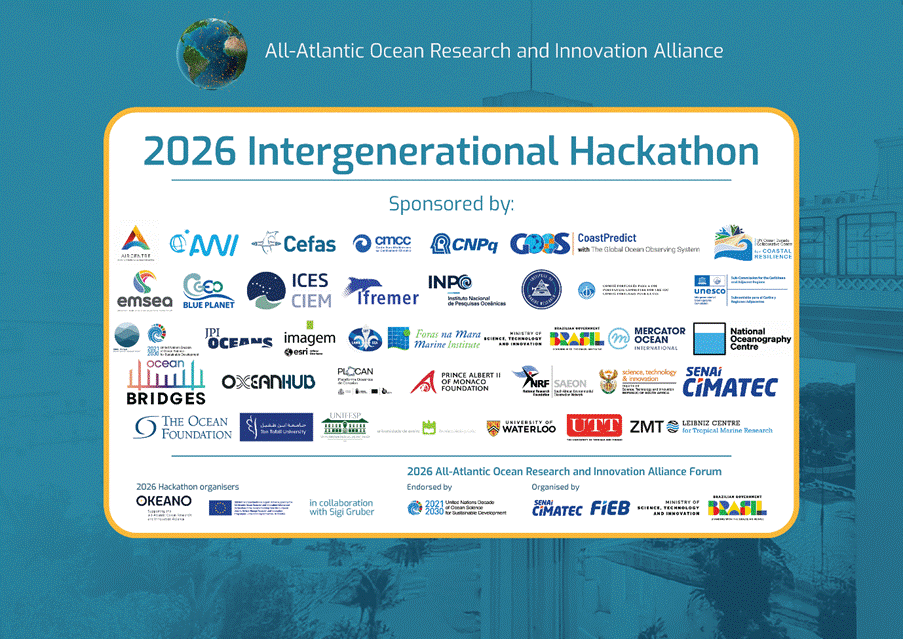
ECOP and LCOP participation was generously sponsored by AIR Centre, AWI, CEFAS, CMCC, CNPq, CoastPredict, DCC for Coastal Resilience, EMSEA, GeoBluePlanet, ICES, IFREMER, INPO, IMR, IMAGEM, IOC-caribe, JPI Oceans, LandSeaLot, the Marine Institute, MCTI, MercatorOcean, NOC, OceanBridges, Oxeanhub, PLOCAN, Prince Albert II of Monaco Foundation, NFR-SAEON, DSI, SENAI CIMATEC, The Ocean Foundation, ITU, UNIFESP, Universidade de Aveiro, University of Waterloo, UTT, and ZMT.
To every ECOP, every coach, every sponsor, and every organiser who gave their time and expertise: thank you, and see you soon.