
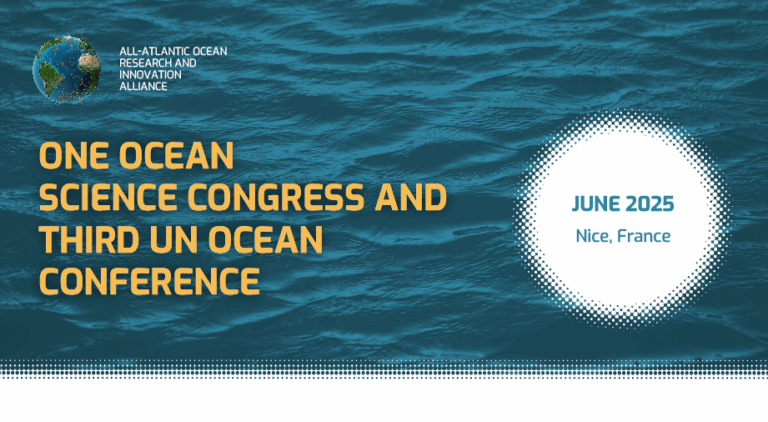
In June, the Atlantic community gathered at the One Ocean Science Congress (OOSC) and the Third UN Ocean Conference (UNOC3), and although these key events took place on the shores of the Mediterranean in Nice, France, the outcomes were very important for the future of the Atlantic, as these events represented a chance to demonstrate how collaborative science can bridge continents and communities.
The recent gatherings at OOSC and UNOC3 showcased the transformative power of collaborative ocean science, with the European Commission’s adoption of the European Ocean Pact—including a new EU Ocean Observation Initiative. AAORIA partners demonstrated leadership across multiple fronts: advancing science communication through storytelling, fostering ocean literacy, developing coastal resilience networks, and ensuring meaningful engagement of Early Career Ocean Professionals (ECOPs) in shaping the future of the Atlantic Ocean.
When Science meets Diplomacy
John Bell, European Commission’s ‘Healthy Planet” Director and 2025 AAORIA Chair, set the tone at OOSC’s opening ceremony. He challenged the global ocean science community to confront what he termed our “decadal moment of decision.” The European Commission’s adoption of the European Ocean Pact this week signals a decisive shift—transforming the European Union into what Bell called an “Ocean Union” and highlighting the importance of open science used to “build bridges and not walls”.
The Pact focuses on ocean observing representing a particularly significant development for AAORIA, aligning perfectly with our area of action on ocean observation and modelling.
Tales from the Tide: rethinking ocean communication
At the “Tales from the Tide” townhall on science communication, organised by Ifremer and OKEANO, the EU-funded Coordination and Support Action charged with the implementation of AAORIA, participants defined science communication in passionate terms: action, solutions, community, emotion, and culture. The discussion evolved beyond traditional strategies to address fundamental questions about governance and meaningful engagement. One participant captured the spirit perfectly: “We need to gather around the ocean like it’s a campfire.” The message was clear—effective communication sparks connection and drives change. When we get it right, people listen and care.
On a Mission to restore the Ocean and Waters: building resilience from the ground up
At the “On a Mission to restore the Ocean and Waters – Towards the deployment at scale of innovative solutions for Ocean restoration and resilience of coastal communities” townhall organised by EU Mission Ocean and Waters, we discussed how to better connect communities dependent on a healthy ocean with the necessary knowledge and innovative solutions to support them in becoming resilient, climate-neutral and future-proof.
Brazil’s announcement that it will become the first country to include ocean literacy in its national school curriculum provided a compelling example of systemic change. As Janice Trotte Duhá from the Instituto Nacional de Pesquisas Oceânicas noted, “Our children will have the ocean as part of their formal education.” This isn’t just policy innovation; it’s generational transformation.
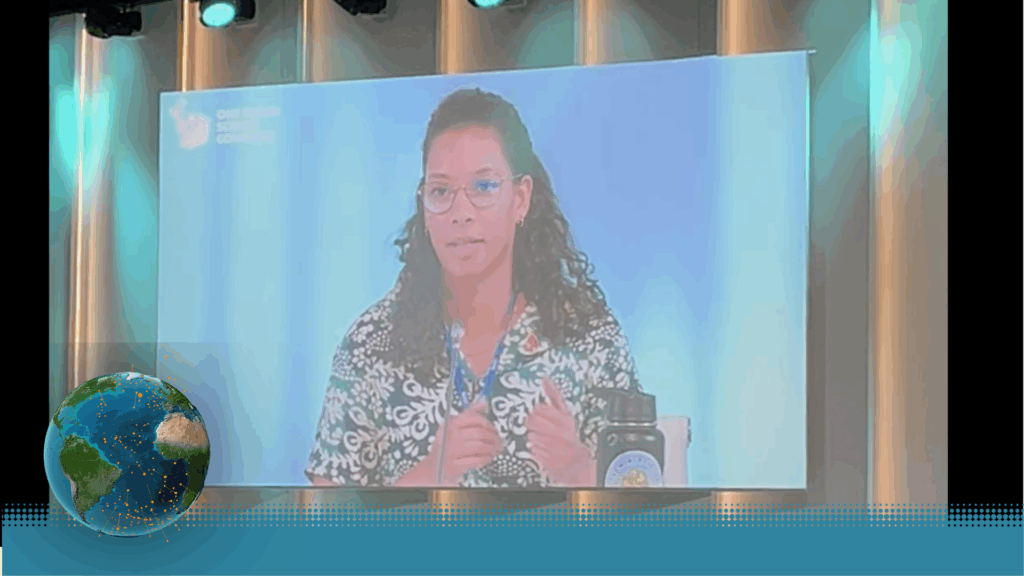
Nikia Gooding, one of the Early Career Ocean Professionals (ECOPs) supported by OKEANO to attend the OOSC, brought a crucial perspective to the table. Her emphasis that ECOP presence in these discussions should not be “just a box to be ticked” highlighted the difference between performative actions and meaningful structural change.
The “Next Generation” is now
The Virtual Early Career Ocean Professional (V.ECOP) Days represented a unique contribution to both the UN Decade of Ocean Science for Sustainable Development and SDG 14. Under the motto “ECOPs shaping the Ocean’s future,” the event connected early career professionals from around the world through livestreams, side events aboard the research vessel Meteor, and mobile journalism. If you missed them, you can rewatch here: https://vecop.net/
The launch of CEOL—the Coalition of Emerging Ocean Leaders—provided a particularly compelling example of how ECOPs are approaching ocean governance. Stay tuned for more news from them!
To advance its policy priorities, AAORIA has intergenerational learning and dialogue at the forefront of its priorities, facilitating collaboration across disciplines, cultures, and nations. These dialogues provide ECOPs with opportunities to engage in mutual learning with their peers, senior ocean professionals, and policymakers. These sessions include brainstorming and pitch presentations, facilitated by discussion coaches, where ECOPs can present their perspectives on advancing science and stewardship of the Atlantic Ocean.
The inaugural Intergenerational Dialogue was held at the Galway Statement 10-year anniversary event in Galway, Ireland, on July 5-6, 2023. This event focused on discussing ocean conservation priorities outlined in the 2022 All-Atlantic Declaration. The positive feedback and active participation have led to the establishment of annual intergenerational dialogues, with the next one scheduled for 2025 in Brussels, Belgium, at the upcoming All-Atlantic Forum. These Dialogues will continue to enhance engagement, mentorship, and networking across the Atlantic, facilitating the exchange of innovative ideas and expertise for a sustainable ocean.
These AAORIA efforts were also recognised within the plenary session of UNOC3 where Jonathan Heimer spoke for the German Marine Research Consortium and emphasised youth engagement and welcomed the upcoming All-Atlantic Blue Intergenerational Programme under the framework of AAORIA.
Ocean Literacy as a cornerstone
The session on “Voices of local actors, public awareness and education,” chaired by Diana Payne, Vice Chair of the Ocean Literacy Group of Experts, positioned ocean literacy as fundamental to building a just and sustainable blue future. The All-Atlantic Ocean Research and Innovation Alliance has been advancing these initiatives across borders since its inception, and the session reinforced why this work matters.
The examples were inspiring: Benin’s Dialogues Océaniques rooting ocean literacy in local culture, the Blue School Initiative connecting students with real ocean science, and the Ocean We Want Survey revealing shared global priorities for a clean, healthy, and productive ocean.
Ocean literacy transcends facts and figures to build agency, justice, and future readiness. It’s about creating not just informed citizens, but empowered ones. The message to OOSC attendees was clear: “If not you, who?”
Coastal Resilience in focus
The panel discussion “Rise for the Ocean and its Peoples: A call for more action in addressing the threats of Sea Level Rise” aboard Research Vessel Meteor brought together diverse perspectives on sea level rise adaptation, examining the intersection of local community needs, policy frameworks, legal mechanisms, and scientific evidence in building resilient coastal socio-ecological systems. This multidisciplinary dialogue underscored the complexity of coastal challenges and the necessity of integrated approaches.
The All-Atlantic Ocean Research and Innovation Alliance’s development of a Coastal Resilience Beacon Sites Network represents a practical response to these discussions, providing a structured framework for addressing one of the most immediate and widespread challenges facing coastal communities across the Atlantic basin.
From dialogue to action
The G20 Ocean20 side event, “Progressing from Dialogue to Action beyond 2030—One Ocean, Many Voices,” encapsulated the central challenge facing the ocean science community. The title itself acknowledges that we’ve moved beyond the phase of identifying problems to the more complex work of implementing solutions at scale.
Strengthening marine science capacity
The Ministry of the Sea and the Sea Institute of Cabo Verde hosted a strategic UNOC3 side event focusing on “Strengthening Marine Science and Capacity Building through the Establishment of Centres of Excellence in Portuguese-Speaking African SIDS”. This initiative, co-organised with UNESCO, GEOMAR, and the AIR Centre, focused on building local scientific capacity to enhance resilience and ensuring long-term sustainability. These Centres of Excellence will empower communities with the knowledge, tools, and networks necessary to protect marine ecosystems while fostering inclusive and sustainable blue economies.
Innovation in Ocean Restoration
The BlueMissionAA project introduced an innovative monitoring approach at OOSC, combining Theory of Change with PESTEL analysis to track marine ecosystem restoration beyond traditional compliance reporting. This framework considers both project impacts and external drivers, supporting scalable restoration efforts under the EU Mission “Restore our Ocean and Waters.”
What comes next?
The weeks of events at OOSC and UNOC3 provided unprecedented opportunities for collaboration, but the true measure of success will be in how these connections translate into sustained action.
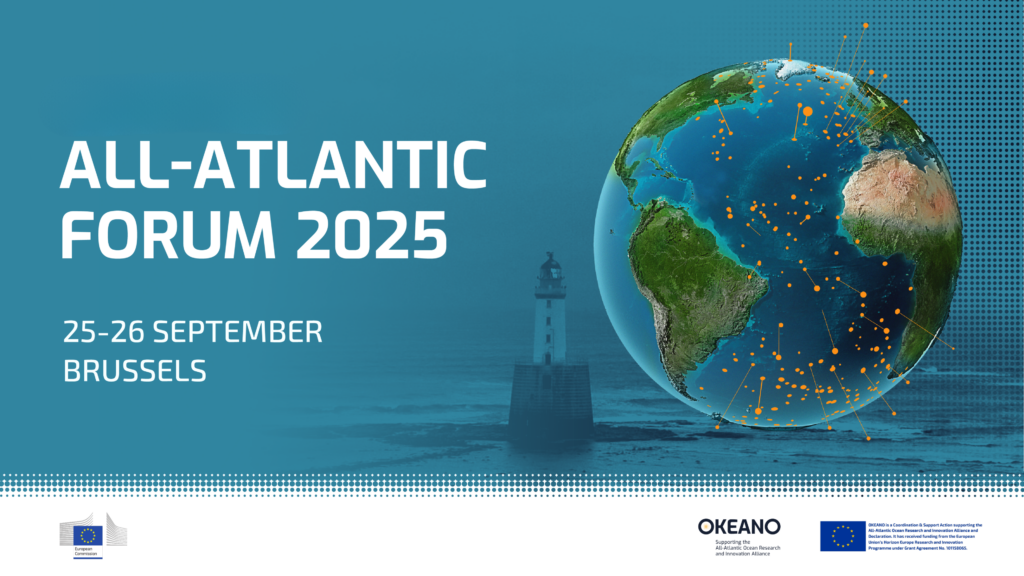
The momentum generated across the Mediterranean will be carried forward to the 2025 All-Atlantic Forum in Brussels, where AAORIA will continue to build on these vital conversations, deepen partnerships, and advance concrete solutions for our shared Atlantic future. This flagship event will provide the perfect platform to transform the inspiring dialogues from Nice into tangible actions that benefit communities across the Atlantic basin.
—————————
The All-Atlantic Ocean Research and Innovation Alliance continues to advance collaborative ocean science across the Atlantic basin, connecting communities, researchers, and innovators in pursuit of a sustainable blue future.
