
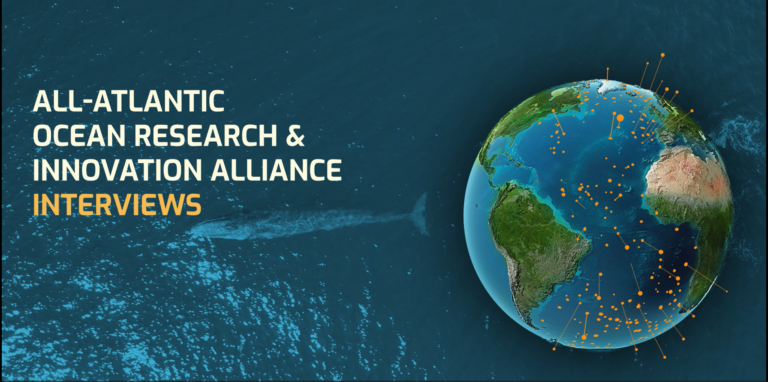
A new instalment of the All-Atlantic Ocean Research and Innovation Alliance interview campaign explores the concept of ocean resilience in the Atlantic context and its significance for coastal communities. Researchers highlight the Alliance’s initiatives designed to strengthen resilience across the Atlantic basin.
The ocean is deeply intertwined with climate, and understanding this relationship is vital for the health of our planet. Coastal communities, despite contributing the least to climate change, are among those most severely impacted by its effects, such as erosion, rising sea levels, and increasingly extreme weather.
Coastal resilience has become a growing focus for both the scientific and political communities worldwide. As an entity that thrives on community and collaboration, the All-Atlantic Ocean Research and Innovation Alliance (AAORIA) has made coastal resilience one of its two main areas of action. While scientists continue to debate its definition and the main challenges across regions, AAORIA is working to consolidate knowledge and transform it into action.
In our interviews Martin Zimmer, a marine ecologist working at the Leibniz Centre for Tropical Marine Research and scientific lead of the Beacon Sites Network, and Alexandra- Sophie Roy, a marine biologist by training currently working as a scientific officer at KDM (German Marine Research Consortium), and coordinator of the Beacon Sites Network, shared their insights. “Resilience can mean different things depending on your perspective”, Alexandra-Sophie explains. It may refer to the ability to absorb and adapt to threats like sea-level rise or marine heatwaves. Martin adds, quoting Godwell Nhamo (Professor, University of South Africa): “If resilience means everything, it doesn’t mean anything at all”. This is why AAORIA focuses its discussions on making resilience tangible, linking science to local realities.
Since we began tackling this issue over a year ago, AAORIA has created two main initiatives: the All-Atlantic Network of Coastal Resilience Beacon Sites and the All-Atlantic Coastal Resilience Knowledge Hub. The AAORIA 2025 Forum in Brussels marked the launch of the Coastal Resilience Beacon Sites Network, which connects locally managed sites around the Atlantic Ocean, bringing science back to the communities. It creates a space where local knowledge, scientific expertise, and practical solutions meet. Through this network, partners exchange good practices, lessons learned, and indicators for measuring resilience, empowering communities to build on one another’s experience. More than a network, it is a growing partnership that values transparency. It celebrates success while also sharing challenges and failures, recognising that open exchange is essential for developing effective, and adaptable solutions across diverse coastal regions. While there is no one-size-fits-all approach, sharing experiences allows solutions in one area to inspire adaptations elsewhere.
“AAORIA brings people and institutions together across the Atlantic”, Martin explains. “All science is interconnected. We need to observe the ocean to develop early warning systems and respond effectively.”, Alexandra-Sophie adds, “We are the most resilient by being together.” Through the Coastal Resilience Beacon Sites Network and the Knowledge Hub, the Alliance provides tools, fosters partnerships, and supports communities in translating knowledge into action.
We invite coastal actors and community partners across the Atlantic to join the Beacon Sites Network and help strengthen this collaborative effort!
Subscribe to our newsletter and follow us on LinkedIn, X, Bluesky and Facebook to enjoy the interviews and discover new stories as they unfold.
